
INTERSTATE 69






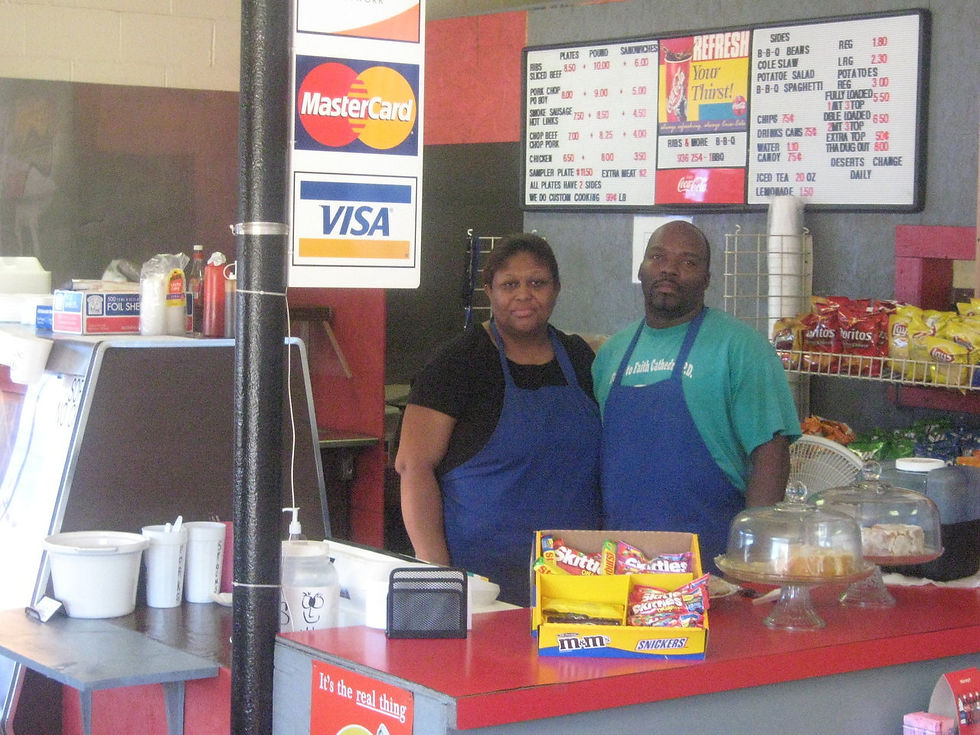
Restaurants, Cafe's and Eateries


Appleby is on U.S. Highway 59 and Farm roads 941 and 2609 seven miles northeast of Nacogdoches in central Nacogdoches County. The site was originally a Caddo Indian village. White settlers began arriving in the area in the 1820s but did not develop a community until the early 1880s, when the Houston, East and West Texas Railway was built through the area. The railroad platted a new town and named it for James Appleby, former auditor of the HEWT.

Cleveland is on U.S. Highway 59 forty miles northeast of Houston in northwestern Liberty County. The recorded history of the area began in 1836, when the General Land Office offered land in the county in exchange for military service.

Corrigan is at the junction of U.S. highways 59 and 287 and Farm roads 352 and 942, about 100 miles north of Houston in north central Polk County. Although for several years a few sawmills and farms had been established in the area, the real impetus for community settlement came in 1881, when the Houston, East and West Texas Railway was completed through northern Polk County.

Garrison is on U.S. Highway 59 eighteen miles northeast of Nacogdoches in northeastern Nacogdoches County. Around 1884 Capt. J. H. (Jim) Garrison bought 387 acres of land on the Attoyac River. The Houston, East and West Texas Railway had been built to Nacogdoches and was seeking a right-of-way to the Sabine River.

Humble is located on the Texas and New Orleans Railroad and U.S. Highway 59 eighteen miles northeast of Houston in northern Harris County, where the Big Thicket meets the coastal plain. The community serves as a retail and shipping center for an agricultural and lumbering section of the Cypress Creek valley at the center of the Humble oilfield, once the largest in Texas. Humble was a crossroads community in 1870, named for its founder, Pleasant S. Humble, a San Jacinto River ferry operator who arrived before the Civil War.

Joaquin is on U.S. Highway 84 and the Southern Pacific Railroad fourteen miles northeast of Center in northeastern Shelby County. It was founded in 1885, when Benjamin Franklin Morris donated 100 acres to the Houston, East and West Texas Railway on condition that a railroad station be constructed on the land. The station and the community that grew up around it were named for Morris's grandson Joaquin Morris. A post office was established there in 1886 with Erastus F. Sayers as postmaster. By 1890 the community had several stores and a population estimated at 100.

Livingston, the county seat of Polk County, is at the junction of U.S. highways 190 and 59, State Highway 146, and Farm Road 1316, seventy-five miles north of Houston in the southern part of the county. The area was acquired in 1835 by Moses L. Choate, who surveyed a townsite called Springfield in 1839.

Lufkin, the county seat of Angelina County, is at the intersection of U.S. highways 59 and 69, a few miles northwest of the geographic center of the county in the heart of the Piney Woods of East Texas. It was founded in 1882 as a stop on the Houston, East and West Texas Railway, when the line built from Houston to Shreveport, Louisiana, and named for Capt. Abraham P. Lufkin, a Galveston cotton merchant and city councilman, who was a close friend of HE&WT president Paul Bremond. Lufkin grew both because of its proximity to the railroad and because of the extensive lumber industry in the surrounding area.

Marshall is located on Interstate Highway 20 approximately thirty-nine miles west of Shreveport, Louisiana, in central Harrison County. Harrison County was marked off in 1839. Two years later, in an effort to influence the commissioners who were choosing a site for the county seat, Peter Whetstone offered land for a courthouse, a church, and a school. The offer was accepted, and the town, named by Isaac Van Zandt in honor of Chief Justice John Marshall, became the county seat in 1842.

Nacogdoches, the county seat of Nacogdoches County, is on State highways 7, 21, 59 (a principal artery to Houston), and 259, fifty miles west of the Sabine River and 100 miles north of Beaumont in the central part of the county. It was named for the Nacogdoche Indians, a Caddo group. Archeological research has established that mounds found in the area date from approximately A.D. 1250, when the Indians built lodges along Lanana and Bonita creeks, which converge just south of Nacogdoches and continue as a single stream to the Angelina River.

Tenaha is at the junction of U.S. highways 84, 59, and 96, on the tracks of the Southern Pacific some eleven miles northwest of Center in northern Shelby County. It was founded in 1885 as a shipping point on the Houston, East and West Texas Railway, when that railroad was being constructed through the county. The community was named by members of the Hicks family for Tenehaw Municipality, the original name of Shelby County. A post office was opened there in 1886 with James N. Woodfin as postmaster. By 1890 the town had 200 residents, several stores, three churches, and a school, and by 1896 it had an estimated 680 residents and a number of businesses, including a weekly newspaper, the Ledger.

Timpson is on the Southern Pacific Railroad at the junction of U.S. highways 87, 84, and 59, fifteen miles northwest of Center in northwestern Shelby County. It was founded in 1885, when the Houston, East and West Texas Railway was being constructed through the area, and was named for P. B. Timpson, an engineer on the railroad. Timpson received a post office that year with James H. Blankenship as first postmaster. It soon became the most important shipping center in the county and by 1890 had a population of 1,200 with a commercial and industrial base that included two sawmills, a weekly newspaper, and a canning factory. The town had been incorporated by 1892 and by 1925 had become a shipping point for lignite mined in the area. Timpson apparently experienced a boom in the 1920s; its population increased to an estimated 2,500 by 1927.